Tuesday, January 6, 2015
Athens Fethiye Mosque
Roman Forum in Athens
Turtles at the Filopappos Hill
Friday, October 10, 2014
Lykavittos Hill
I always wondered why ancient Athenians founded their fortress on the Acropolis hill? After all, in Athens there is more applicable place for stronghold – the Lykavittos hill which is highest point of the city.
You will feel, how it’s difficult just to climb here on foots even without the weight of ammunition. But it’s a few times harder to do with military equipment on your shoulders and even more harder if somebody from top of the hill will try to clog your action. Of course, for your sake, in the nowadays there is a funicular which will quickly deliver you on the top.
Btw, ancient Athenians shared my point of view. They believed that initially Athena thought to build the Acropolis fortress here but unintentionally released the rock out of her hands when she was carrying it to the city.
Startlingly, but there are not many mentioning about this rock in the classical ancient Greek literature. We have only a few words in Aristophanes’s and Plato’s works. I also wonder whether or not ancient Athenians ascended to the hill to enjoy spectacular view of the city?
Today at the top of the Lykavittos hill you can find small Agios Geуrgios church which originates from the 19th century. This church has been built on the site of more elder church. Of course, at the Lykavittos hill there are café, observation desk, restaurant and scene where jazz and pop music are played.
Thursday, October 9, 2014
Filopappos Hill
One of the greatest views of Acropolis in Athens you can get from the Filopappos Hill which soars on 147 meters over Athens. Also this mound - it’s a good green park where you can escape from the big and bustling megapolis. Filopappos Hill dominates over the residence of the ancient city and always played a great role in its defense system. From the other point of view it’s always has been a key to the Athens. If somebody wanted capture Athens he should had take control over the Filopappos Hill first.
Kserks stormed Athens from this point and kept track the run of Salamine Battle (Salamine island is visible from the Filopappos Hill). Later famous ancient strategist Demetrios Poliorketes built the fortress here to keep his eyes open over the city and control the road to the Piraeus. You can see the vestiges of this stronghold today.
And Venetian admiral Francesco Morosini in 1687 shelled the Acropolis from here when tried to storm the city.
But its name the mound inherited from the name of the monument on its top which was built in 114 in homage of Roman consul Caius Julius Antiochus Philopappus. The monument has been adorned by the statues and friezes which portrayed Caius Julius and his grandfather.
In the Middle Ages were the beliefs that this monument is a tomb of Orpheus so Filopappos Hill also is known as Hill of Orpheus or Hill of Muses.
Sunday, October 5, 2014
Pnyx Hill
Pnyx Hill in Athens – is a birth place of democracy. City’s assembly gathered here in 5th and 4th centuries BC and here were made most important decisions of Athenian ancient history.
At the peak of Athenian glory citizens met here about 40 times per year. Everybody could speak here. Most famous orators and most famous Athenian politics (such as Perikles and Demosthenes) talked here. And assembly was listening them and made their votes.
The berma (scene for speakers) was carved in the cave and still exists. So you can try your skills in oratory. In ancient times this scene was a first step to the Zeus temple which is not survived.
Another ancient vestiges at Pnyx Hill – it’s remains of the wall which supported a big terrace where gathered Athenian citizens.
Pnyx Hill located in front of Acropolis and even if you are not interested in the history you will not be disappointed by this place. As for me from the Pnyx Hill you can make the best photos of Acropolis. In ancient times Pnyx Hill and its surroundings were the central part of Athens. Here were located the houses of richest citizens and temples of Acropolis were built in such way to please their eyes. I think your eyes will be pleased too.
Tuesday, September 30, 2014
Erechtheion
Erechtheion was a most sacred place in ancient Athens. Temple has been dedicated not only to the one god but to many gods and heroes honored in Athens. Also Erechtheion has been a shrine of first Athenians kings.
Like others buildings of Acropolis Erechtheion has been built between 421 and 406 BC during the wide reconstruction of Athens after the Persian War. Or better to say that temple has been restored after old Erechtheion was turned into ruins by Persian troops.
According to the Greek legends, Erechtheion was built on a place of bet between Poseidon and Athena for the right to be the backer of the city. Poseidon stabbed his trident and gave to Athenians the source of water while Athena raised the olive tree. Athenians decided that the gift of Athena was more valuable for them and named their city after her.
But the temple itself was named in honor of Erechtheus who was the first king of Athens and it was a sanctuary of Erechtheus and Athena. Also the cult of Poseidon was worshiped here.
It was not easy task to build temple on this place because it’s uneven. But ancient architects did it. Erechtheion had a big cella which has been partitioned into a three rooms. In one of them was keeping the wooden statue of Athena.
It was generally accepted that this statue has been made from sacred olive tree and it was created not by human but by the divine hand of one of the Olympic gods. During the Panathenaic celebrations statue was dressing into the special mantle which was weaved by the young Athenians women. Before the statue always glowed gold lamp.
Beneath the Erechtheion was secret underpass which led to the cave of Acropolis snake. This snake was sacral for Athenians. During the Persian Wars they agreed to leave the city only after they heard that snake left the cave and will follow to them in their exile.
On all sides Erechtheion has been adorned by Ionic porticos. The most wonderful from them was south portico (the Porch of the Caryatids) where columns portrayed dancing women. Today you can see their copies while original Caryatids are kept in Museum of Acropolis.
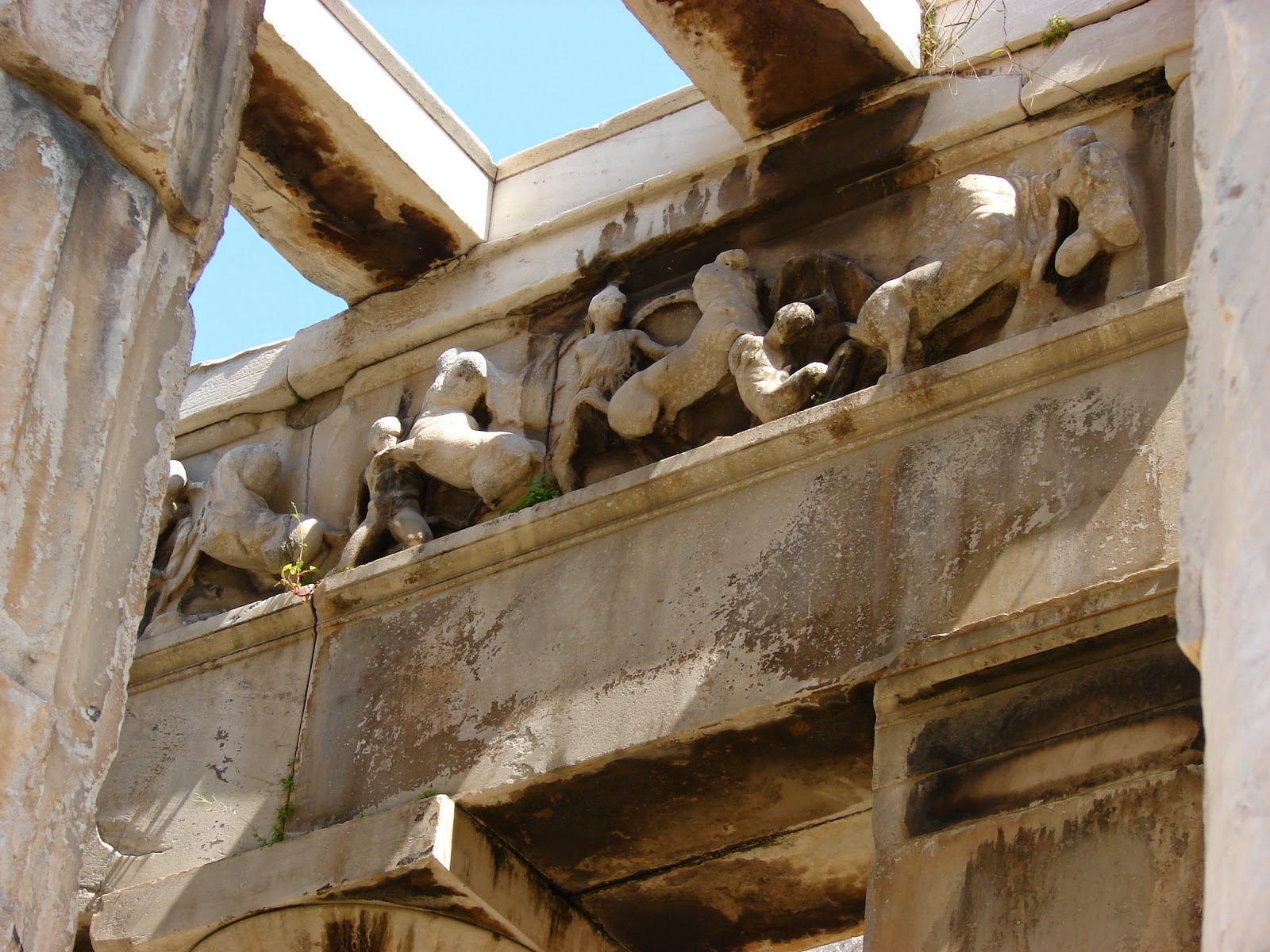
Erechtheion was most graceful temple of Acropolis. It got the admirations of many ancient philosophers, artists and even kings.
In the Middle Ages Erechtheion served for different purposes. In some period it even was a harem of Turkish rulers in Athens.
It was badly damaged during the War of Independence when Acropolis has been stormed by Turkish troops. In nowadays Erechtheion has been carefully restored. Of course not fully but enough to give you idea how it looked at the Golden Era of Athens.
Today Erechtheion has modern legend related with Caryatids. In 19 century one of them was lost and since the others cry every night and call her. Of course, Acropolis is closed on the nights so you cannot attest it.
And most spectacular pictures of Erechtheion you can make from opposite hills.
Wednesday, September 24, 2014
Propylaea
The way to the Acropolis in Athens leads through Propylaea; ancient building which as other monuments of Acropolis has been built in time of Athen’s extreme power. Propylaea were designed in way to suppress foreign visitors of Athens before they was coming into Acropolis.
One of the rivals of ancient Athens, the strategist city of Thebes Epaminondas, once said that if Thebes has Propylaea they will surpass by beauty the Athens.
Despite the fact that work under the Propylaea was interrupted during the Peloponnesian War, Mnesikles (who was the architect of Propylaea) managed to finish it and create the building which was admired by all over the ancient world. The Propylaea is rectangular building with two porticos on its flanks. It had five entrance doors with columns of Ionic and Doric styles after which visitor came into the vast vestibule which had a lavish interior with ceiling adorned by the gold star.
At the north flank of Propylaia was established so-called Pinakothek the first art-gallery of the world. After the Propylaea the word of Pinakothek was spread over the world as meaning of art museum.
The climb to the Propylaea in ancient times was leading on the road of 80 meters length and 20 meters wide. This road was convenient not only for people. It was designed also to facilitate delivery to Acropolis the loads.
In the times of ruling of Emperor Claudius another one memorial staircase was built and in the 3 century next to Propylaea were built gates of Bele which are named in honor of French archaeologist Ernest Bele.
In the Middle Ages Propylaia served for different purposes. Generally it shared the fate of other buildings in Acropolis. It was an archbishop’s palace, the residence of Lord of the Latin Empire and when the Athens were got by Turks, it became the fortress.
As a fortress Propylaea were badly damaged a few times. First time it struggled from the gunpowder exposure and next time Propylaea suffered from the lightning which blew to the Propylaea and fired it.
In the 13th century to the Propylaea was added watch tower which has been dismantled in 1874.
In the modern times Propylaea often used as model for other buildings. For example in accordance to its design was built Propylaea in Munich.
Tuesday, September 23, 2014
Botanical Garden Athens
Botanical Garden in Athens was created in 1840 by decree of Queen Amalia. Athenians also call this garden – “Royal Park”. Amalia was very passion about taking care of Garden and even had used Royal Navy to bring plants from remote locations of the world.
Park was designed by Friedrich Schmidt who also spent a lot of time in search of sparse plants. After Greece became the Republic Botanical Garden partly lost its grandeur which it had in 19 century. But it remains one of the attractive places in the city.
In additional to the lot of plants, you can see the remains of old aqueduct and Roman mosaics. Also you can visit a Botanical Museum and old zoo.
At the south part of the park there is so-called Zeppion, conference hall, which was built in 1888 by Theophil Hansen. Next to it there is small café where you can have a rest after the stroll over the Garden.
Sunday, August 3, 2014
Kerameikos
Kerameikos is a hidden treasury of Athens. Most sightseers visit the Greece capital for a short period. Usually they only climb to the Acropolis and don’t explore carefully the rest of the city. For me it’s a mistake because in Athens you can find a lot charming places and this city is worth more time than a one or two days excursions.
In the 478 BC when were built the walls of Athens the area of Kerameikos belonged to the ancient Athens dem of Kerameik and was divided on the two parts. This area has big deposits of upscale clay so from the ancient times it was settled by the potters.
Two parts of Kerameikos were joined by the gates and from one of them started the road to the ancient Eleusis. Another road from Kerameikos led to the ancient Piraeus.
In ancient Athens were not cemeteries inside of the city walls. Ancient Greeks buried their friends and relatives outside the city along the roads. Kerameikos in ancient Athens was the burial place; may be today it’s one of the famous ancient cemeteries in the world. It was the place where Pericles pronounced his famous speech about the cohesion of Athenians after the first year of the Peloponnesian war.
Today the part of this ancient cemetery is restored. The place is quiet and you probably will not meet a lot of people here. Original monuments from Kerameikos were transferred to the National Archeological Museum of Athens and in place of them were installed their copies of high quality.
Sunday, July 6, 2014
Temple of Hephaestus
This temple has been built in the middle of the 4 century BC in the times when Athens reached the maximum point of its political influence. Temple dominates over the Agora of Athens and was dedicated to the Hephaestus.
This temple is very well preserved. As I know, it was only one building of antiquity in Athens which saved its columns, relief, walls and roof. When Greece become independent in the 19 century, the temple hosted first National Archeological Museum of the Greece.
Saturday, July 5, 2014
Stoa of Attalos
This ancient passage has been built by the King Attalos in the 2 century BC and inherited its name from the king’s name. So today we know this building as the Stoa of Attalos.
In the ancient times the Stoa had twin purpose. It was the market place with a lot of different shops and the place for entertainments. I think that the Stoa of Attalos could pretend to be the first supermarket in the world.
Stoa of Attalos located near the entrance to the Agora. Today it’s very well refurbished building which hosts the Museum of the Agora inside. In the museum you can see a lot of artifacts from the ordinary life of ancient Athenians: sculptures, pottery, mosaics, etc.
Friday, July 4, 2014
Ancient Agora of Athens
In ancient Athens Agora (market place) was the center of the political and administrative life of the city. While
Acropolis could be treated as the center of sacral life, the Agora of Athens could be considered as the center of the civil life.
It was the place where citizens of the Athens gathered to hear latest news and discuss some political issues and of course it was the place where they made their own business.
Ancient Agora of Athens located under the Acropolis, at the south from the hill of the Areopagus. According to the archaeological excavations this place has been already settled from the 3000 BC. During the time of the Persian invasion Agora was destroyed completely but recovered soon after the end of the war. And what is interesting is that the life on the Agora never stopped until now days.
Now Agora is one of the most expressive ancient places in the world. I have deep believe that if Athens would not have the Acropolis, the city could still be considered as the greatest ancient city because the city wields Agora.
North part of the Agora
At the north part of the Agora you can see the ruins of the building which is known as the “Basilica”. This building has been built in the 2 century BC. Also you can find here the ruins of the portico which was built in the 5 century BC. In the ancient times it was very popular place among Athenians since it was adorned by the pictures of Greek artists.
Central part of the Agora
In the central part of the Agora you can find ruins of the ancient temple which was built in honor of the Leo, - the hero who saved Athens from the plague. Further there are ruins of the temple which was dedicated to the all Olympian gods and the ruins of the temple which was dedicated to the Ares.
Also here you can find the ruins of the Odeon which has been built in the 15 BC and initially has been used for musician performances and later for the lectures. This Odeon has been destroyed at the 267 and in place of it Gymnasium has been built to give young men in Athens opportunities for the physical training. Also let me say that all central part of the Agora in Athens filled within the ruins of the ancient monuments.
West part of the Agora
This part of the Ancient Agora in Athens could be considered as the birth place of the democracy. There is believe that Solon exactly in this place proclaimed his democratic laws at the middle of the 7-th century BC. So I think that this part of the Agora is the cradle of our society.
Later here Athenians built special portico which has been used as the place for political debates. Here were made most important decisions in the Athens’s history. For example, it was the place where in the times of war with Persian Athenians discussed about how to wage the war. Also it was the place where Athenians met envies from the foreign cities and countries.
At the west part of the Agora were a few important official buildings. For example, you can find ruins of the Foloss – the building where stored the keys from the temples in the city as well as the official seal of the Athens.
Monday, June 30, 2014
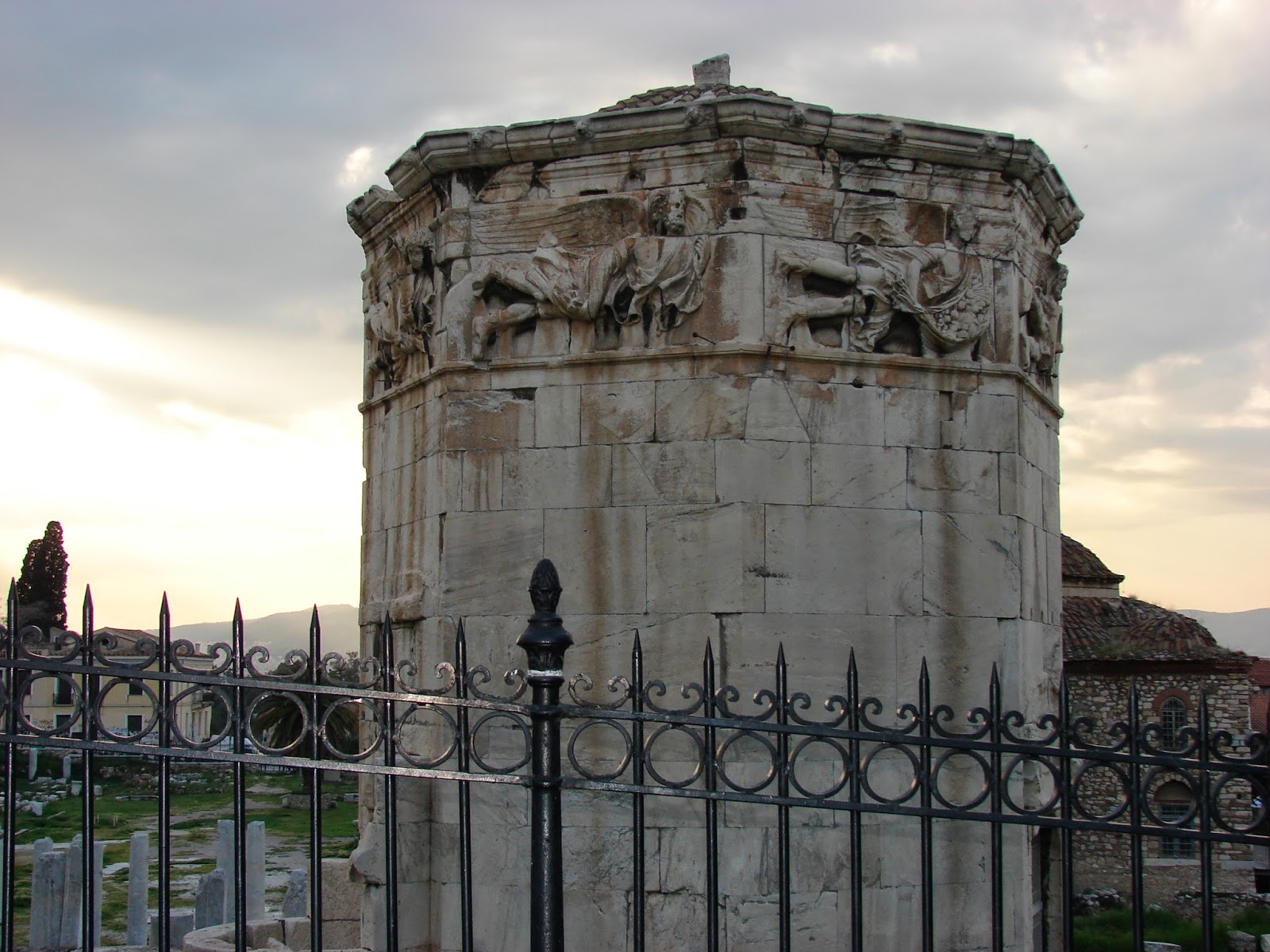
Tower of the Winds Athens
Friday, June 27, 2014
Temple of Olympian Zeus Athens
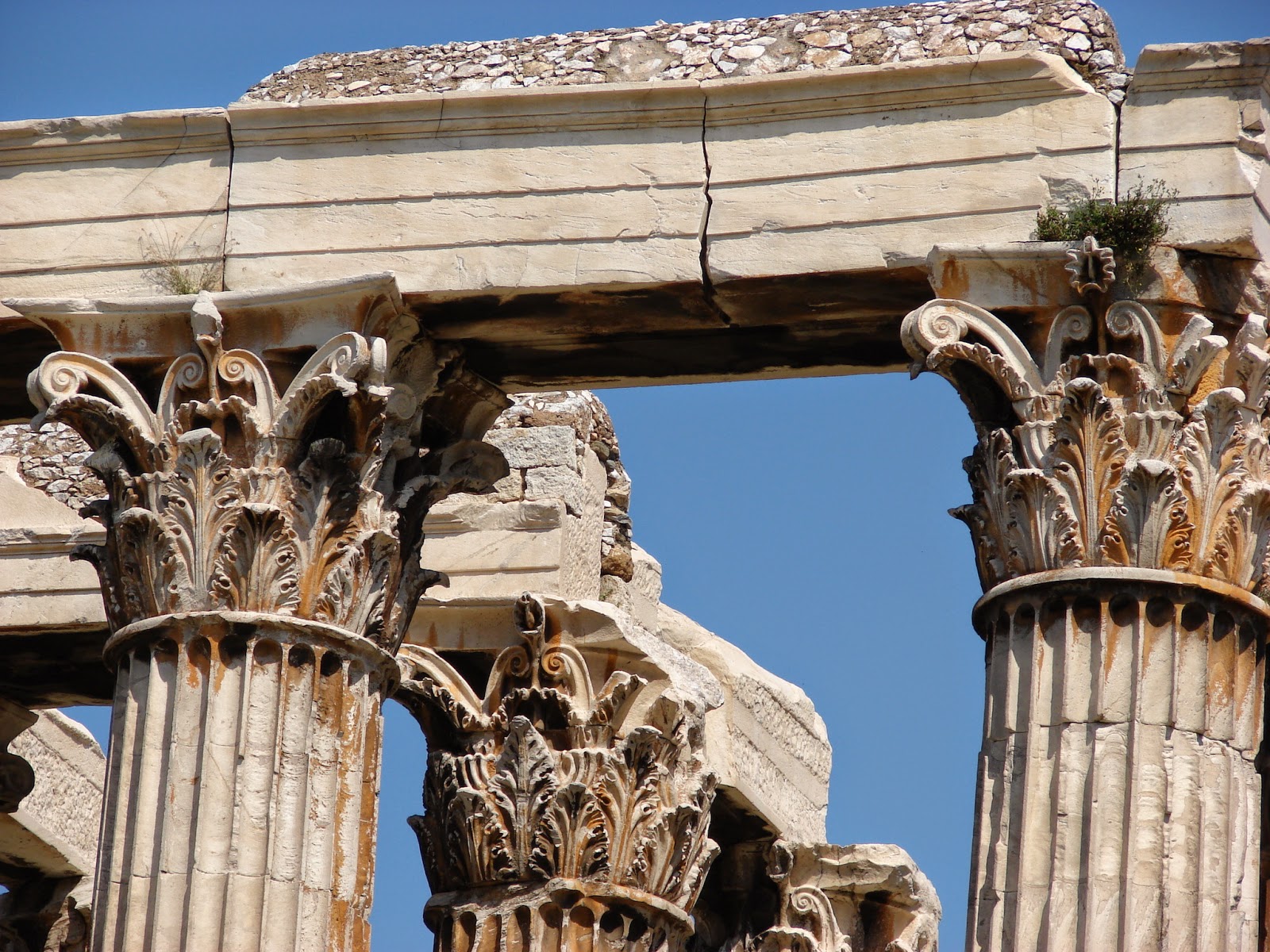
When you will visit the Acropolis of Athens from its eastern side you will notice the spectacular ruins. It’s ruins of the biggest temple of ancient Greece – the Temple of Zeus which is also called as the Temple of Olympian Zeus.
Since the Temple of Zeus is the biggest ancient temple you would not be surprised to know that it was the longest construction of antiquity.
The building of temple lasted 650 years. It was started in the middle of the 6-th century BC when in Athens ruled Pisistratus and was finished in Roman era, when the city was visited by the Hadrian.
Hadrian loved the Athens. When he visited the city he not only finished the temple (and devoted it to the Zeus) but also built a new quarters and Triumph Arch to separate the old city from the new. Of course, now it’s all old. The word “new” only emphasizes how old the Athens was that even 2000 years ago there was the old and new parts.
The area around the temple always was sacred. Ancient Athenians believed that at the south from the temple was the crack to where seeped the last water after the Flood. Also it was the place where the Codri (the last king of Athens) made his exploit in the battle between Athenians and Dorias. Also here Socratus gathered his pupils.
In the Middle Ages As other ancient buildings, temple have used as source for the constructions. Before Ottomans captured the Athens the temple was almost demolished and was lying in the ruins.
The excavations of the temple began in the 1889. They were conducted by the British School of the Archeology.
Interesting event near the Temple of Zeus happened 20 January 2007. The group of the young men decided to restore cult of Zeus in Greece and conducted worship dedicated to Zeus.
The Temple of Zeus in ancient times
Initially the temple was built from the tufa and limestone. The temple was surrounded by the portico with the big columns with 2 meters diameter. But this version of the temple was not finished.
In the 175 BC Antiochus Fourth has tried to finish the project but his attempt also was not successful. Of course he contributed some new features into the view of temple.
And as I already told the construction has been finished only by Emperor Hadrian. Hadrian was not a modest person and put own statue near the statue of Zeus inside the temple. The statue of Zeus was made from the gold and the ivory.
According to the Roman historian Titus Libyan The Temple of Zeus in Athens was only one place on Earth which worth to be the Zeus’s residence.
After the temple has been finished around it emerged the little Roman settlement ruins of which you can see today.
Also near the Temple of Zeus was located the Panathenaic Stadium which was constructed at the 4-th century BC. The stadium has been destroyed during the Turkish era and refurbished before the Olympic Games in 1896.